Tire Pressure & Cornering

Chris Isidore
| 25-08-2026
 · Vehicle Team
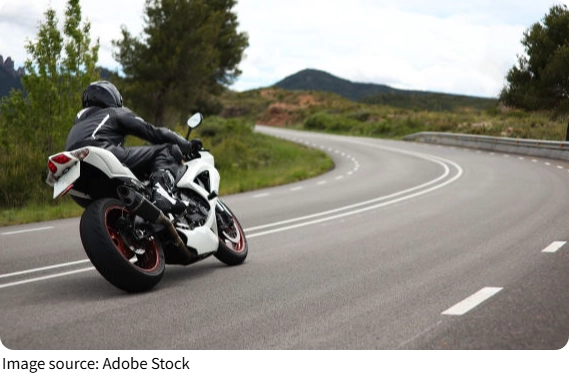
Leaning into a curve on a motorcycle requires a precise connection between the tires, chassis, and road.
Suspension setup and riding technique are important, but tire pressure also has a direct influence on how the motorcycle responds.
The correct pressure helps the tires maintain their intended shape and operating characteristics, supporting predictable steering, consistent road contact, and stable handling.
How Pressure Affects Grip
A motorcycle tire continuously deforms as it supports the motorcycle and responds to braking, acceleration, cornering forces, and changes in the road surface. Proper inflation allows the tire to operate within the characteristics for which it was designed.
When pressure is too low, the tire can flex more than intended. This additional deformation can increase heat generation and alter steering response, potentially making the motorcycle feel heavier or less precise when entering a curve. Excessive pressure can make the tire feel firmer and less compliant over uneven pavement, affecting how smoothly it follows the road.
Steering Response Through Curves
Cornering confidence depends largely on predictable steering behavior. With the correct pressure, the motorcycle should respond consistently to steering inputs and provide clear feedback through the chassis and handlebars.
Underinflation can contribute to heavier or slower steering because increased tire flex changes the tire's response. Overinflation can produce a firmer feel and reduce compliance over rough surfaces. Maintaining the recommended pressure helps preserve the balanced handling characteristics established for the motorcycle.
Heat and Tire Wear
Pressure also influences how much a tire flexes during operation. An underinflated tire undergoes greater deformation as it rolls, which can generate additional heat. Sustained excessive heat can accelerate wear and, in severe circumstances, contribute to tire damage.
Incorrect pressure can also affect wear patterns. Uneven or unusual tread wear may indicate an inflation issue or another maintenance concern. Regular inspection therefore complements pressure checks and helps keep handling consistent throughout the tire's service life.
Why Cold Pressure Matters
Tire pressure should normally be checked when the tires are cold. During riding, the tires warm up and the air inside them expands, causing the pressure reading to increase. A hot reading should therefore not be compared directly with the specified cold pressure when deciding whether to release air.
The motorcycle manufacturer's owner's manual or vehicle information label should be the primary reference for the correct pressure. The pressure marked on a tire's sidewall should not automatically be used as the motorcycle's recommended setting, as it can represent a tire-specific maximum or load-related limit rather than the vehicle's normal operating pressure.
Account for Load Changes
The recommended pressure may vary according to the motorcycle's load. Carrying a passenger or additional luggage can change the demands placed on the tires, which is why manufacturers may provide separate settings for different load conditions.
Following the appropriate recommendation helps the tires support the motorcycle correctly while preserving predictable handling and stability.
Make Pressure Checks a Routine
Checking tire pressure is a simple but important maintenance habit. Use a reliable pressure gauge and measure both tires when they are cold. Compare the readings with the motorcycle manufacturer's recommended values and make adjustments when necessary.
Pressure checks should also be combined with a quick visual inspection. Look for uneven tread wear, visible damage, or other unusual changes. If the motorcycle suddenly feels different while cornering, tire pressure is one of the first things worth checking. If unusual handling remains after the pressure has been corrected, the tires and motorcycle should be professionally inspected.
Keep Every Corner Predictable
Tire pressure is a small maintenance detail with a significant effect on motorcycle handling. Maintaining the correct setting supports predictable steering, consistent road contact, controlled heat generation, and even tire performance.
For riders who want a motorcycle that feels composed and responsive through curves, regular cold-pressure checks are one of the simplest habits to maintain. A properly maintained tire keeps the motorcycle's connection with the road more consistent, helping every corner feel controlled, balanced, and predictable.